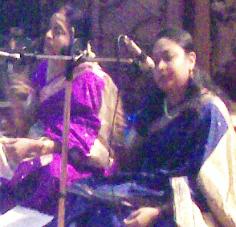
Harikatha, also called Katha Kalakshepa is a form of discourse in which the story teller explores a theme, usually the life of a saint
or a story from one of India’s epics. Harikatha is a composite art form comprising of story telling, poetry, music, drama, dance, and
philosophy. Any theme may be the subject for the Harikatha. Traditionally Hindu religious themes were the subject. During its peak
Harikatha was a popular medium of entertainment, which helped transmit cultural, educational and religious values to the
masses.
- When and how did this art form originate?
During the 17th and the 18th century CE, the Marathi Harikatha was introduced in Thanjavur. The Harikatha of Maharashtra was
a specific form of spiritual teaching coupled with music, dance and theatrics. The growth of Harikatha was further helped by the
Hindu saint Samartha Ramdas Swami established his Matha in 1663 at Thanjavur. His disciples such as Bhimaraja Swami
conducted keertans and bhajans in the matha. During the late 17th century, many other Maratha saints established their
mathas in Thanjavur, which helped popularise the Harikatha style. One of the early pioneers of Harikatha in Tamil Nadu was
Thanjavur Krishna Bhagavatar (1847 – 1903), who wanted to improve the Kalakhepa style.
The Marathi Keertan, or Harikatha was of two types: Varkari and Narada. The Varkari style consists of singing various compositions
of Marathi saints. These songs were accompanied by explanations of the songs. There was no story telling in this style. The Narada
style, which became popular in the Thanjavur court, gave importance to stories from the epics. Thanjavur Krishna Bhagavatar
adapted the Marathi metrical compositions used in the stories to highlight the mood and the characters. Krishna Bhagavatar also
realised the importance of dramatic enactment of various aspects of the story.
- What are the different styles?
Harikatha involves the narration of a story, intermingled with various songs relating to the story. Usually the narration involves
numerous sub-plots and anecdotes, which are used to emphasize various aspects of the main story. The main story teller is usually
assisted by one or more co-singers, who elaborate the songs and a Mridangam accompanist. The storyteller uses a pair of
cymbals to keep beat.
- Who are the famous exponents?
Following Krishna Bhagavatar, other great exponents of this art form such as Pandit Lakshmanachar, Tirupazhanam
Panchapakesa Bhagavatar, Mangudi Chidambara Bhagavatar, Muthiah Bhagavatar, Tiruvaiyyar Annasami Bhagavatar, Embar
Srirangachariyar, Konnoor Sitarama Shastry, Sulamangalam Vaidyanatha Bhagavatar, Sulamangalam Soundararaja
Bhagavatar, Ajjada Adibhatla Narayana Dasu, Embar Vijayaraghavachariar, Saraswati Bai and Padmasini Bai popularied the
Harikatha tradition.
|
|